Imagine landing a new role where your primary mission is to build reports, dashboards, and visualizations for a fast-growing business. The leadership team wants to understand how users interact with their core product, and they need clear data to make strategic decisions.
To make this happen, you need a centralized repository aka ‘Data Warehouse’ designed specifically to collect, organize, and manage large volumes of data from various sources.
Phase 1 – The Honeymoon Period
At first, your job is relatively straightforward. The company is young, and the entire product runs on a single transactional database.
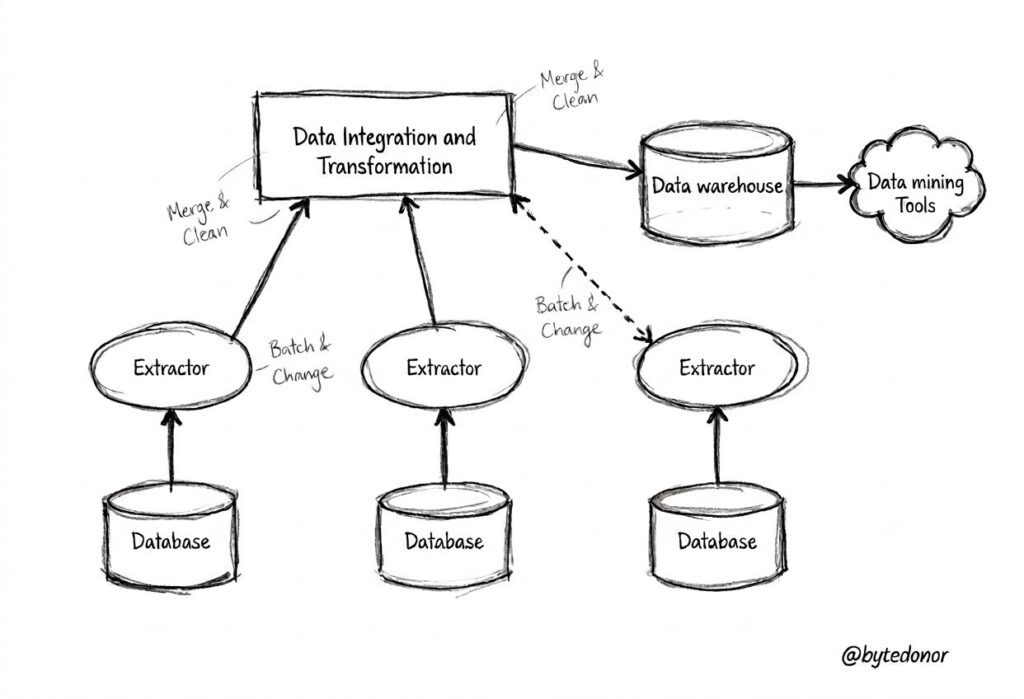
A few months pass, and the company signs up for a third-party CRM and an external marketing tool. The business team wants this new data blended into their existing reports. You adjust your pipelines, pull from the third-party APIs, write a few SQL joins and aggregations, and hand over the updated dashboards. It takes some effort, but it is highly manageable.
Your workflow follows a clear, predictable pattern:
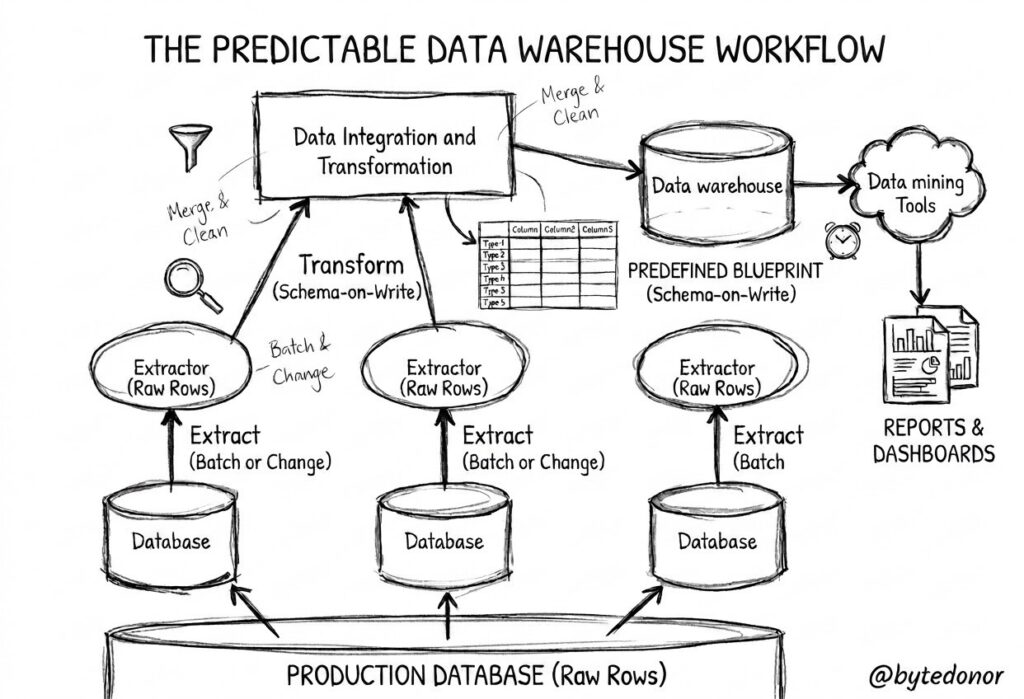
So, the data warehouse acts as your single, clean source of truth, keeping analytics running smoothly without slowing down the live application database.
Phase 2 – The Breaking Point
Then, success happens. The company’s user base explodes.
To keep up with the scale, engineering breaks the monolithic application into dozens of independent microservices. The marketing team adopts five new software platforms. The product team starts tracking granular user clickstreams, IoT device pings, and customer support chat transcripts.
Suddenly, your manageable data ecosystem turns into a chaotic web of disconnected data silos.
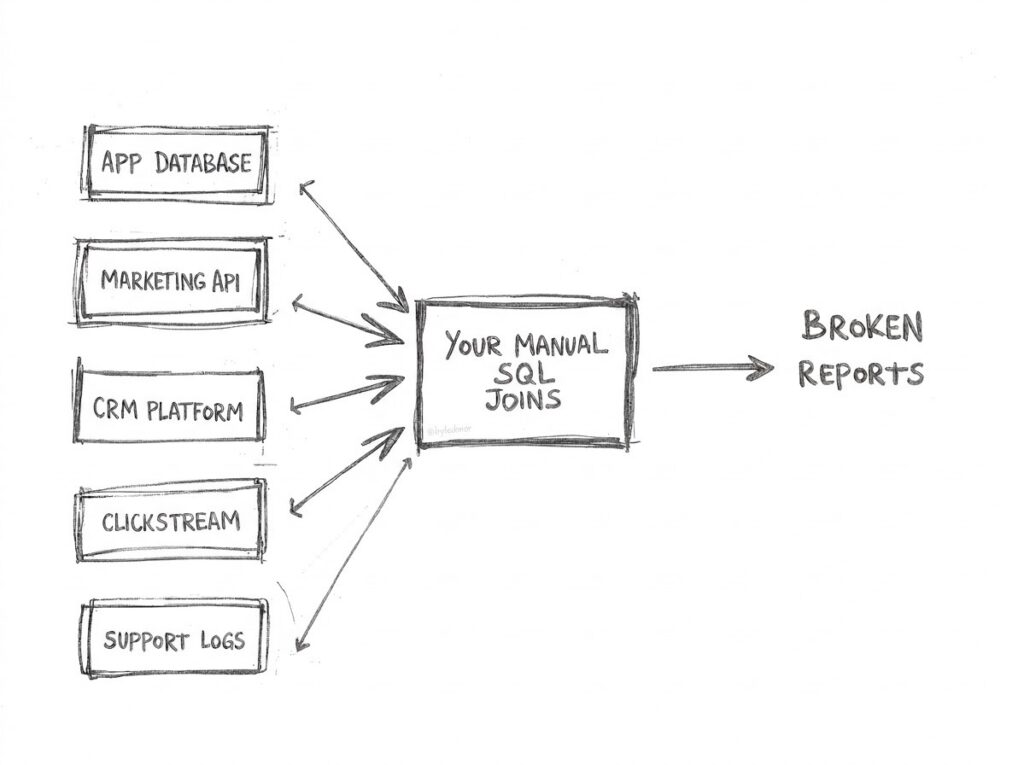
You quickly realize you can no longer pull data from every individual source separately and combine it by hand. The scale is too massive, the manual pipelines are constantly breaking, and your queries are taking hours to finish.
The Unstructured Trap
Beyond the pure volume of data, you hit an even bigger wall, the shape of the data itself.
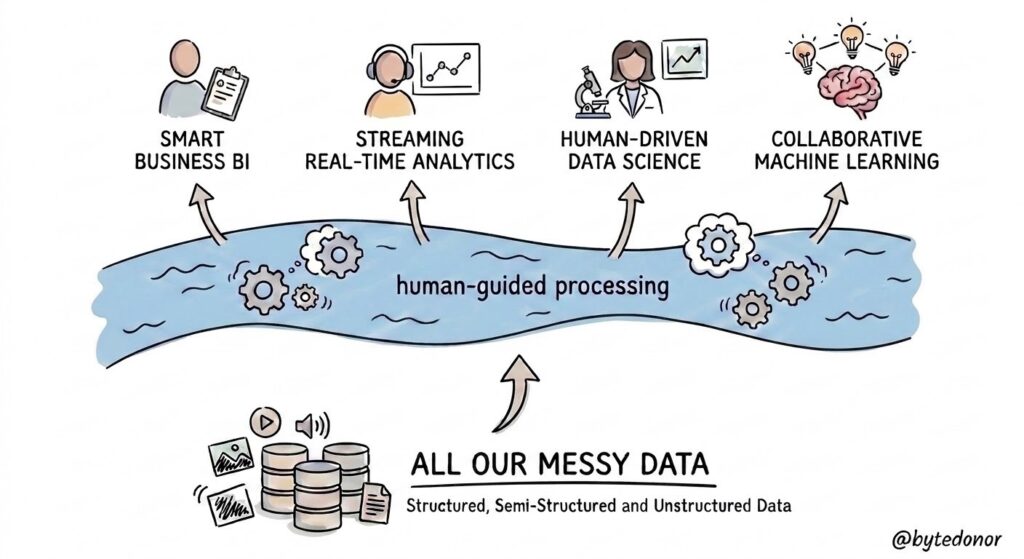
Traditional relational data warehouses are strictly structured. They expect clean tables with predictable rows and columns, integers, strings, and dates. But modern business apps generate a massive amount of semi-structured data (like nested JSON logs) and completely unstructured data (like audio recordings from customer calls, support documents, or product images).
Trying to force a collection of raw audio files, video data, or free-form text documents into a traditional SQL database is like trying to fit a square peg into a round hole. It causes massive performance drops, ballooning storage costs, and immense architectural friction.
This exact limitation is what forced the industry to look beyond the warehouse, paving the way for the Data Lake and eventually the Data Lakehouse.
Contents
Understanding the Core Architecture
At its foundation, a Data Warehouse is designed to solve a single, massive problem i.e. fragmentation. It serves as a unified repository where an organization can centralize, store, and manage vast volumes of data collected from completely different sources, all to power the company’s analytical workloads.
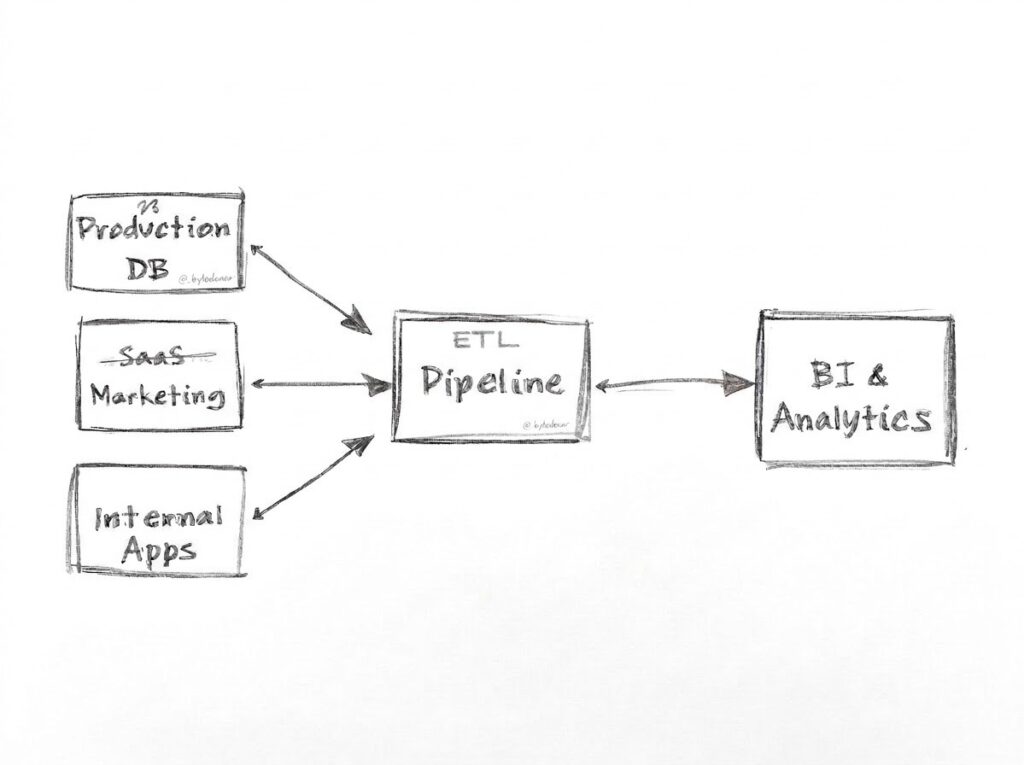
So, In the classic data warehouse setup, the pipeline follows a strict, disciplined sequence:
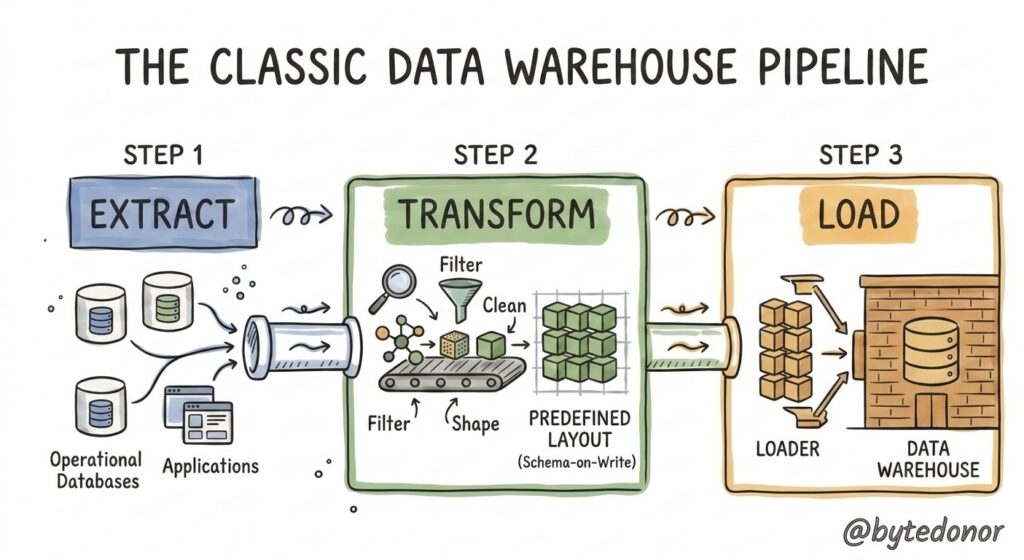
Extract – Pull data out of the operational databases and applications.
Transform – Clean it, filter it, and shape it into a strict, predefined layout (Schema-on-Write).
Load – Push the perfectly structured data into the warehouse.
By providing a single, organized place for data storage and retrieval, the warehouse allows business analysts to run complex queries smoothly without ever touching production systems. It makes company-wide reporting highly efficient—assuming your data is predictable.
The Breaking Point: The Unstructured Wave
While this structured setup works perfectly for classic business data like sales transactions or inventory lists, it quickly hits a wall when modern data types enter the mix. That’s how Data no longer arrives exclusively in neat, tabular formats. A massive portion of the information a modern business generates is messy:
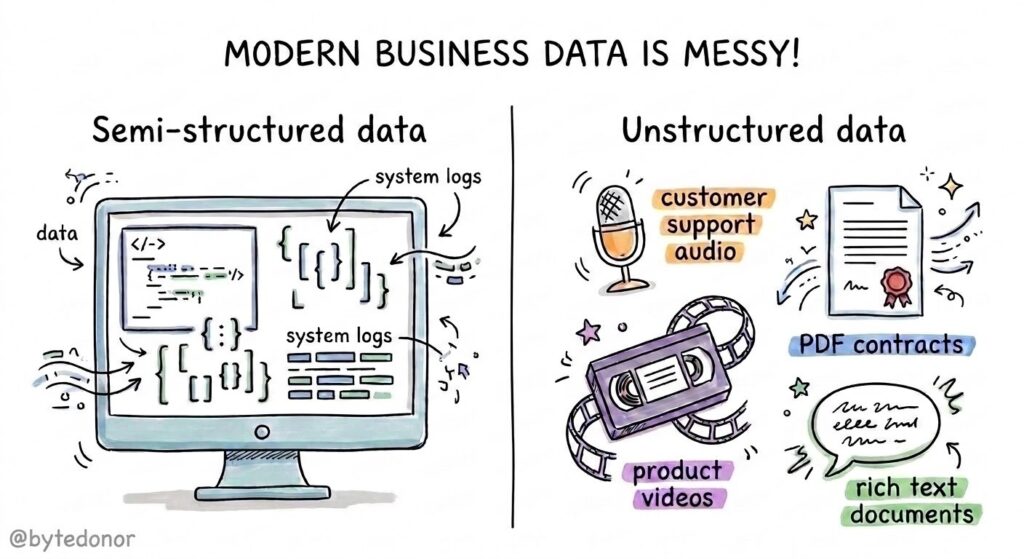
Semi-structured data – Nested JSON payloads from web applications or system logs.
Unstructured data – Customer support calls audio, product videos, PDF contracts, or rich text documents.
This is where the relational data warehouse faces its toughest challenge. Because it is fundamentally built to handle strict rows and columns, forcing unstructured files into its rigid tables causes massive architectural friction, high storage costs, and severe performance issues.
When a business needs to analyze rich data formats alongside standard numbers, the traditional warehouse model breaks down, setting the stage for the next major evolution: The Data Lake.
The Big Data Era: Merging Lake and Warehouse
If you’ve spent any time in tech, you’ve heard the term “Big Data.” Dot-com survivors like Yahoo, Google, and Amazon pioneered this frontier in the early 2000s. As their data exploded in both scale and variety, traditional warehouses choked.
Therefore, To solve this, Yahoo built Apache Hadoop, introducing MapReduce for processing and HDFS for storage, heavily inspired by Google’s early research papers. This marked the birth of the Data Lake.
Unlike rigid warehouses, a data lake lets you store massive amounts of raw data in its native format without defining a schema beforehand.
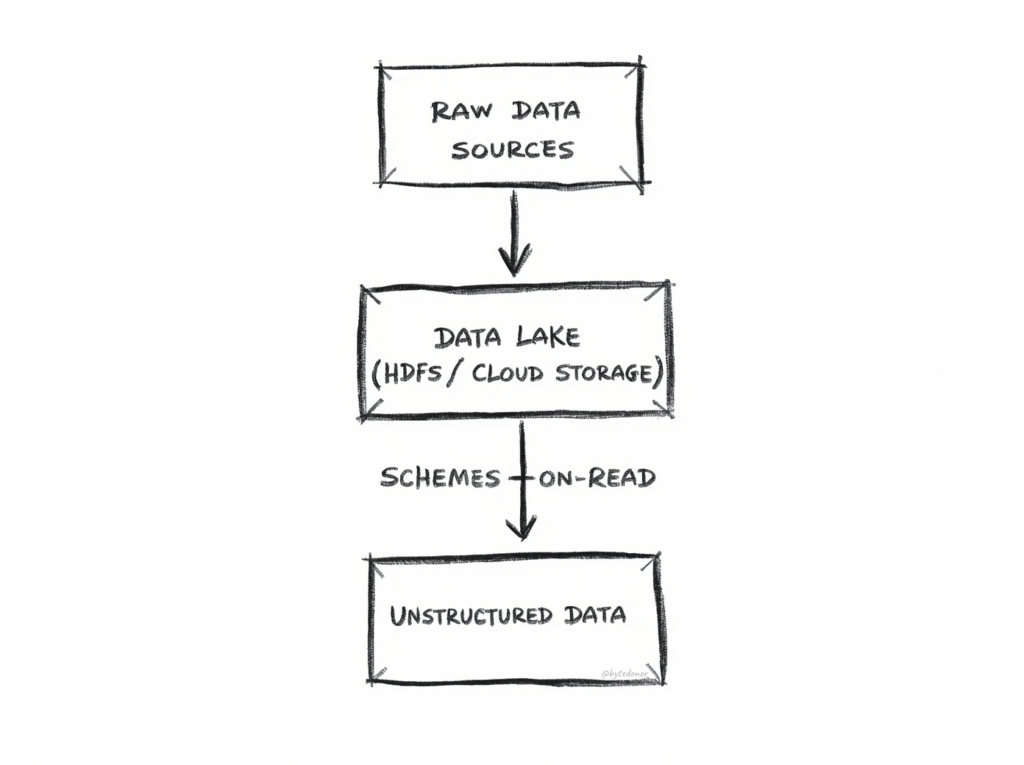
| The “Data Swamp” Failure | The Two-Tier Compromise |
| Initially, companies tried to replace warehouses entirely by running analytics directly on the lake. It failed spectacularly. Without database guardrails, lakes quickly turned into chaotic Data Swamps lacking data discovery, quality controls, ACID transactions, and basic data manipulation (DML) support. | The fix? Combine them. For over a decade, the gold standard architecture used a Data Lake to cheaply ingest raw data, and a downstream Data Warehouse to hold a cleaned, structured subset of that data for business reporting. Advanced workloads, like machine learning, bypassed the warehouse to hook directly into the raw lake. |
The Breaking Point of the Two-Tier Model
While the hybrid approach worked, maintaining two entirely separate storage tiers introduced heavy operational friction:
Enter the Data Lakehouse
Well, to kill this two-tier complexity, Databricks pioneered a new paradigm ‘The Data Lakehouse’. The goal was simple to bring data warehouse-grade management features directly on top of low-cost cloud object storage.
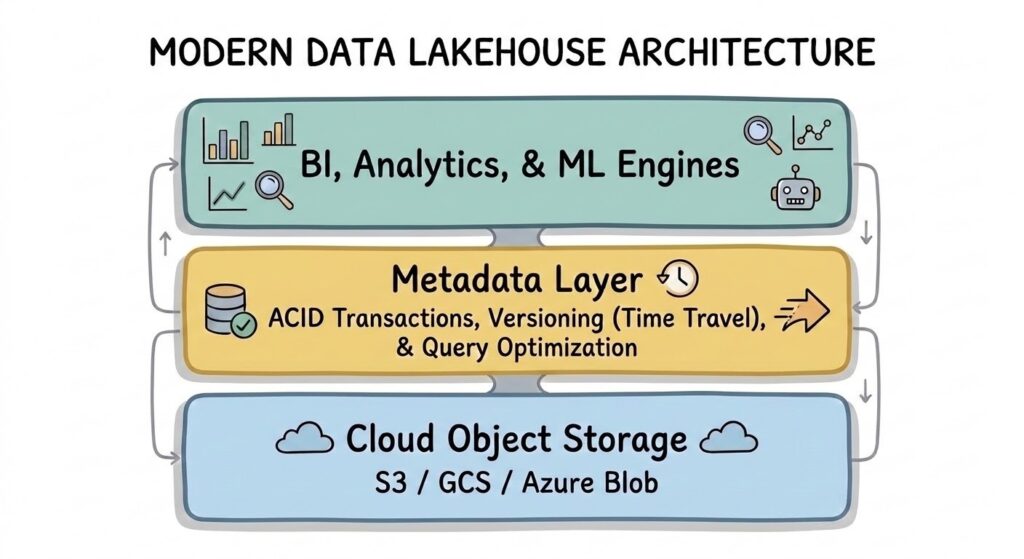
The magic piece that early data lakes lacked is the open metadata layer. Instead of raw, unmanaged file dumps, modern lakehouses use open table formats:
Delta Lake (created by Databricks)
Apache Iceberg (created by Netflix)
Apache Hudi (created by Uber)
Furthermore, every data operation must pass through these table formats. They record detailed statistics (like min/max column values) that allow query engines to instantly prune unnecessary data, radically boosting performance.
By managing data this way, the Lakehouse unlocks features previously exclusive to traditional databases like table snapshotting, time travel, ACID compliance, and schema evolution.
Wrapping Up
Looking back at how these architectures evolved shows us that no design happens in a vacuum, “every new paradigm is a direct response to the limitations of the last”.
So The Lakehouse architecture bridges the gap between massive scale and strict control. With major infrastructure moves keeping the momentum going such as AWS introducing native S3 Tables and the Lakehouse paradigm is positioned to dominate modern data engineering for a long time to travel.